The 10 Best Chromebook Proxies for School, Privacy & Remote Access in 2026
The Chromebook is the dominant student device in 2026 — Google ships ChromeOS into more than 60 million K-12 seats globally, and managed-device deployments now make up the majority of new corporate laptop rollouts in education and SMB sectors. That popularity is exactly why a reliable Chromebook proxy matters: ChromeOS doesn't run native VPN clients the way Windows or macOS do, so a browser-level or system-level proxy is often the only realistic way to bypass content filters, change your IP, or secure a public Wi-Fi session.
This guide covers the ten best proxies for Chromebook in 2026, ranked for the four use cases that actually drive search traffic: students unblocking school content filters (Lightspeed, GoGuardian, Securly, iboss), remote workers protecting Chrome Remote Desktop and Splashtop sessions, privacy-focused users on public Wi-Fi, and power users running web scraping or sneaker-cop bots from a Chromebook profile.
You'll also find a step-by-step ChromeOS setup walkthrough, a head-to-head between residential and datacenter proxies for Chromebook use cases, and the seven most-asked questions about how Chromebook proxies behave in 2026 — including the school-managed-device scenario, where most legacy guides quietly fail.
Best Chromebook Proxy Providers of 2026 — Quick Summary
1. IPRoyal - Best overall Chromebook proxy with 34M+ residential IPs and city-level targeting
2. MarsProxies - Best for sneaker copping and automation on ChromeOS
3. CometVPN - Best VPN for managed Chromebooks and bypassing on-device filters
4. Oxylabs - Largest enterprise IP pool for large-scale Chromebook tasks
5. Bright Data - Most ideal for high-volume scraping from a Chromebook profile
6. Shifter - Premium residential proxy servers with sticky sessions
7. Proxy-Seller - Reliable mix of datacenter and residential proxies
8. PrivateProxy - Experienced provider with stellar private proxies
9. Proxy-Cheap - Affordable datacenter IPs for budget setups
10. Rayobyte - Robust datacenter proxy network
What Is a Chromebook in 2026?
A Chromebook is a laptop or 2-in-1 tablet that runs Google's ChromeOS rather than Windows or macOS. The OS is browser-first: most apps run inside Chrome or as Progressive Web Apps, with optional Linux and Android container support for power users. Boot times are measured in seconds, security updates apply automatically, and the device's attack surface is minimal compared to a full PC — which is why ChromeOS now dominates K-12 education and is making serious inroads into enterprise BYOD programs.
The trade-off is that ChromeOS doesn't natively run desktop VPN clients (NordVPN's, ExpressVPN's, Surfshark's full apps all require x86 or Android) and the system is locked down by default. That's why proxies for Chromebook remain the most flexible privacy and unblocking tool in 2026 — they work at the network or browser layer that ChromeOS does fully expose.
Why Do You Need a Proxy for a Chromebook?
Chromebooks ship with strong built-in security, but they don't ship with a way to change your IP. A Chromebook proxy fills that gap and serves four high-intent use cases that drive almost all of the 2026 search volume.
- Bypassing school and workplace filters — On managed ChromeOS devices, content filters from Lightspeed, GoGuardian, Securly, and iboss block everything from Discord to YouTube. A proxy gives the browser a different exit IP that those filters often can't categorize.
- Privacy on public Wi-Fi — Coffee-shop and airport networks are still prime hunting grounds for traffic snoopers. A proxy hides your home IP and keeps your browsing private even when ChromeOS doesn't have a desktop VPN client installed.
- Geo-unblocking and travel access — Streaming, gaming, and account-management workflows all break when you cross borders. A residential Chromebook proxy in your home country routes traffic through a real ISP IP that services treat as a normal home user.
- Remote access security — If you use Chrome Remote Desktop or Splashtop to connect from a Chromebook into a Windows or macOS machine at home or work, layering a proxy in front of the session adds an extra encryption hop and a clean exit IP — useful when remote-access traffic is being throttled or geo-fenced.
- Automation and scraping — Chromebooks are popular among hobbyist sneaker-coppers and data-scrapers because the OS is cheap and reliable. A rotating residential proxy gives those workloads the IP diversity they need to avoid bans.
Best Chromebook Proxies for School & Unblocking Content
The single largest cluster of "chromebook proxy" search volume in 2026 comes from students on school-issued Chromebooks trying to access blocked content — Discord, YouTube, social media, and games — through one of the four major K-12 filtering stacks (Lightspeed, GoGuardian, Securly, iboss). What works depends on how locked down the device is.
Managed Chromebooks (Force-Installed Filter Extensions)
If your Chromebook signs in to a school Google account and the filter extension can't be removed from chrome://extensions, you're on a fully managed device. The standard system-level proxy fields under Settings → Network → Proxy are locked, so a paid proxy server alone won't help here.
The two methods that consistently still work in 2026 are: a CometVPN Chrome extension installed from the Chrome Web Store (which routes only browser tabs through an obfuscated server, sidestepping the agent's traffic inspection), and self-hosted Ultraviolet or Rammerhead instances on Replit or Railway that present a different domain on every refresh. See our Lightspeed Filter bypass guide for the full breakdown.
Personal Chromebooks (Owner-Configurable)
If the Chromebook is yours and you control its Google account, ChromeOS exposes the full proxy stack. You can either install a Chrome extension like SwitchyOmega and feed it residential proxy credentials from IPRoyal or MarsProxies, or configure the OS-level proxy under Settings → Network → Wi-Fi → Proxy. Both unlock geo-restricted content and bypass any DNS-level filtering on the local network.
Whichever path fits, the policy reminder is the same: bypassing a school's Acceptable Use Policy can result in disciplinary action, and these tools are intended for users with the legal right to use them on devices they control.
How to Set Up a Proxy on ChromeOS (Step-by-Step, 2026)
ChromeOS exposes proxy settings per Wi-Fi network — meaning you configure the proxy on the network itself, not the device, so switching networks switches your proxy with them. The setup is the same on every modern ChromeOS build (M120 onward) and works for both residential and datacenter providers.
- Click the system tray in the bottom-right corner and select the Settings gear icon.
- Under Network, click the Wi-Fi network you're currently connected to.
- Expand the Proxy section. The default is "Direct Internet connection".
- Switch to Manual proxy configuration.
- Enter the proxy endpoint into the HTTP proxy (or SOCKS host) field and the port into the Port field. For residential providers like IPRoyal or MarsProxies, the endpoint usually looks like
geo.iproyal.comorresidential.marsproxies.comwith port 12321 or 7777. - If your provider requires authentication (almost all paid ones do), check Use the same proxy for all protocols and enter your username and password when ChromeOS prompts on the next outgoing request.
- Optional: under Do not use the proxy settings for these hosts and domains, list
localhostand any internal sites that shouldn't be tunneled.
For per-tab control instead of full-network routing, install the SwitchyOmega Chrome extension and store multiple proxy profiles — useful if you want one tab on a US residential exit and another on direct Internet. SwitchyOmega is the de-facto standard for ChromeOS power users and works on personal Chromebooks; managed devices may have it blocked from the Web Store.
Residential vs. Datacenter Proxies for Chromebooks
Picking the right type of proxy is the difference between a setup that works for a year and one that gets blocked the first week. The summary below is what we recommend after testing both classes against ChromeOS use cases in 2026.
| Use case | Best proxy type | Why |
|---|---|---|
| Unblocking school filter on a personal Chromebook | Residential | School filter blocklists target datacenter ASNs aggressively; ISP IPs slip through. |
| Streaming geo-restricted content (Netflix, Hulu, BBC iPlayer) | Residential | Streaming services blocklist datacenter ranges almost universally in 2026. |
| Sneaker copping and bot automation | Rotating residential | Sites flag repeat datacenter requests within minutes; rotating ISP IPs survive longer. |
| Web scraping at scale | Datacenter (with residential failover) | Datacenter is fast and cheap; switch to residential when targets push back. |
| Privacy on public Wi-Fi | Either (residential safer) | Both encrypt the hop; residential additionally hides the fact you're using a proxy. |
| Remote access (Chrome Remote Desktop, Splashtop) | Datacenter (low latency) | Sub-20 ms datacenter IPs keep desktop sessions snappy; residential adds 40-80 ms. |
| Budget setup, light use | Datacenter | $1-2 per IP per month vs. $3-5 per GB residential. |
The pragmatic 2026 stack is a residential plan from IPRoyal or MarsProxies for everything user-facing (school, streaming, automation), plus a small datacenter pool from Proxy-Cheap or Rayobyte for fast scraping where IP reputation isn't critical.
Full Chromebook Proxy Provider Reviews
So far, you’ve probably realized why you may need to use proxy services with Chromebooks. Now it’s time to tell you where to find them. Below is a comprehensive list of some of the best Chromebook proxy providers you can opt for.
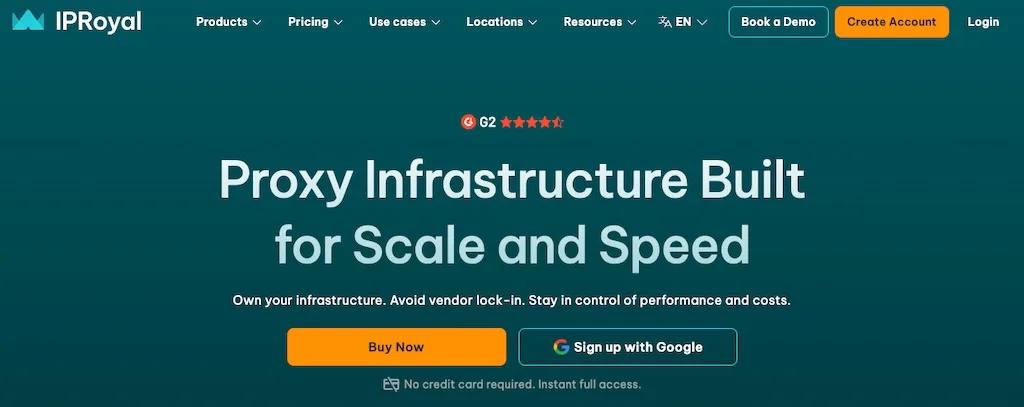
- Pricing: Residential proxies start at $7/GB with an option for great discounts for bulk orders. Static residential proxy servers retail at $1.80 per IP. Datacenter proxy servers start at $1.80 each, while sneaker proxies start at $1 each. Finally, the mobile proxy servers start at $90 a month.
IPRoyal has been in the spotlight since it hit worldwide markets more than three years ago. The company offers state-of-the-art residential, datacenter, mobile, ISP, and sneaker proxy servers. On top of that, it offers a host of tools to make your experience smoother, including a proxy manager and a proxy tester.
This provider has a pool of over 8 million IPs in more than 195 locations worldwide, but the proxy network is constantly increasing. They support valuable features such as HTTP(S) and SOCKS5 protocols, sticky and rotating sessions, instant IP changes, non-expiring bandwidth, etc.
The customer support system is stellar, and the pricing is pretty flexible, with a pay-as-you-go option available. Finally, the dashboard is easy to use, making navigation and proxy monitoring seamless even for beginners.
✓ Features
- 8+ million IPs in over 195 locations worldwide
- Pocket-friendly prices
- High-performance servers
- HTTP(S) and SOCKS5 support
- Good session control
- User-friendly dashboard
- Static and rotating sessions
- Non-expiring bandwidth (for residential IPs)
- Unlimited bandwidth (for datacenter, ISP, mobile, and sneaker IPs)
✗ Negatives
- No free trial

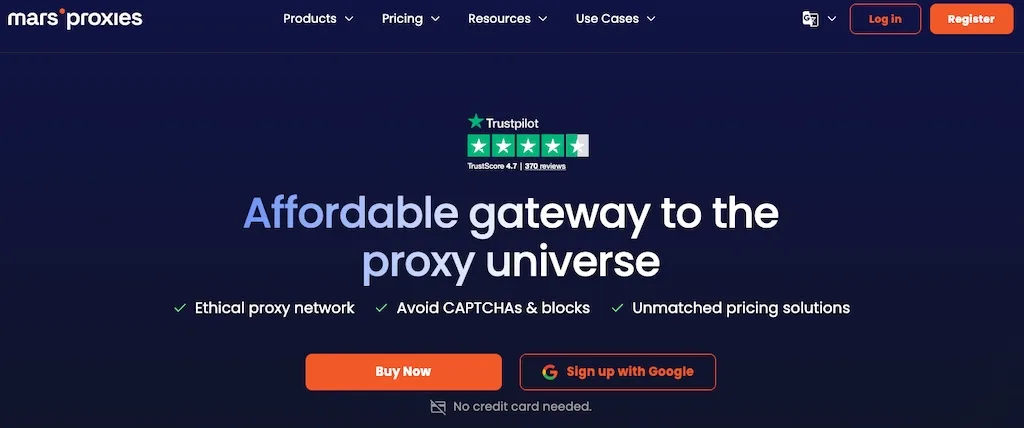
- Pricing: Residential proxies start at $3/GB and ISP at $2/proxy. The datacenter proxy servers cost $0.80/IP for the daily plan and $1.40 for the monthly plan.
Are you looking to cop sneakers from your Chromebook laptop? MarsProxies is the perfect proxy provider for this job. The little-known provider has a range of IPV4 proxies from 200 locations worldwide.
MarsProxies’ pool currently stands at 550,000 servers divided into residential, datacenter, and ISP proxy networks. They stand out because they have clear IP addresses unbanned on all stores online. Also, they are compatible with all sneaker bots, making them ideal for copping highly coveted, limited-edition sneakers.
The inexpensive packages include instant activation, a 99.9% uptime, SOCKS5 support, sicky and rotating sessions, non-expiring bandwidth for the residential plan, and unlimited bandwidth for the datacenter and ISP proxy plans. You also get a 24-hour money-back guarantee and a daily plan, but no free trial.
✓ Features
- 550,000 clean IPs in 200 locations
- Unbanned IPs
- Easy-to-use dashboard
- Dual authentication
- SOCKS5 support
- Good for sneaker copping
- Flexible and scalable plans
- Unlimited bandwidth
- Fast speeds and high uptime
✗ Negatives
- Poor product diversity

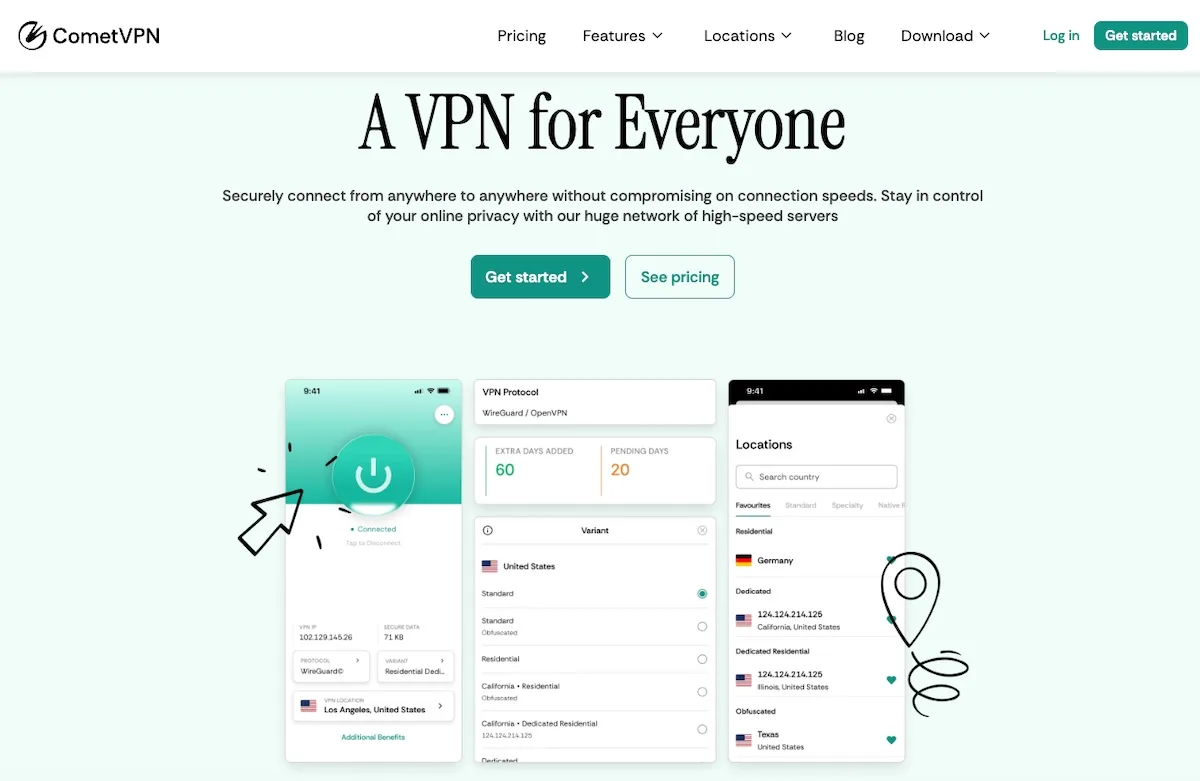
- Pricing: CometVPN starts at $1.89/mo on the two-year plan with a 30-day money-back guarantee. The Native Residential VPN add-on is $1/GB.
Chromebooks are the only mainstream device most users can't easily install a system-level VPN client on, which is exactly the gap CometVPN fills. The CometVPN Chrome extension installs from the Web Store in two clicks, runs entirely inside the browser, and routes only your tabs through the encrypted tunnel — so school or work-managed devices that block native VPN apps still get full coverage where it matters.
For Chromebook users in 2026, the killer features are the obfuscated servers (which look like normal HTTPS to filters like Lightspeed, GoGuardian, and Securly), the Native Residential VPN tier with real ISP IPs, and the kill switch that drops traffic if the tunnel fails. The 50+ country server list is enough for any standard geo-unblock, and the 32 million-IP residential pool keeps you off the consumer-VPN datacenter blocklists that mainstream providers get caught on.
The trade-off vs. a dedicated proxy provider is that you can't pin a specific city or rotate per-request the way MarsProxies or IPRoyal allow. For pure browsing, streaming, or filter bypass that doesn't matter — for sneaker copping or scraping, you'll still want a proxy backend.
✓ Features
- One-click Chrome extension
- Obfuscated WireGuard / OpenVPN servers
- Native Residential VPN with real ISP IPs
- 50+ country server list
- AES-256 encryption + verified no-logs
- Kill switch and split tunneling
- Based in Panama (outside 14 Eyes)
✗ Negatives
- No per-request IP rotation
- Native Residential billed per-GB on top of the base plan

- Pricing: The cheapest package is $500 a month and gets you different bandwidths and features depending on the proxy you go for. Small-scale users can opt for the pay-as-you-go option.
Bright Data is known for its high-quality proxies and robust proxy infrastructure. The Israeli company has serviced Fortune 500 companies and institutions worldwide and has an impressive track record to back it up.
This provider grants you access to over 72 million servers in over 195 worldwide locations, an impressive pool size and location coverage, we must say. With support for sticky and rotating sessions, high uptime, and high-performance servers, your experience will likely be seamless.
This provider is geared towards data collection and has several tools for that purpose. They include ready datasets and a web scraper IDE. This is why Bright Data can be a good proxy source if you want to collect data on your Chromebook.
✓ Features
- 72+ million IPs in over 195 locations
- Good session control
- 3-day money-back guarantee (individuals)
- 7-day free trial (businesses)
- Flexible and scalable plans
- Dual authentication
- Scraping tools
✗ Negatives
- Very high prices

- Pricing: The residential proxy service starts at $15 per GB, while the mobile proxies start at $250 for 20GB monthly. The rotating ISP proxies start retailing at $340 for 20GB a month. The shared and dedicated datacenter proxy servers retail at $50 and $180 monthly.
Like other top-tier networks on this list, Oxylabs is a general-purpose provider with a special focus on web scraping; hence it offers streamlined tools to facilitate this task. This provider is hailed for its mammoth IP pool of over 100 million IPs in over 195 locations.
The provider offers residential, datacenter, ISP, and mobile proxy servers with fantastic features such as high-speed connections, dual authentication, SOCKS5 support, and more. With such a huge pool and catalog, you can expect premium Chromebook performance.
Oxylabs has several APIs dedicated to web scraping. They are categorized based on the niche, whether eCommerce, SEO, real estate, or general scraping. However, the proxies are expensive, and customers have complained that the dashboard is hard to use.
✓ Features
- 100+ million IPs in 195 locations
- Scraping tools
- 7-day free trial (businesses)
- 3-day money-back guarantee (individuals)
- Amazing catalog
- SOCKS5 support
- Dual authentication
✗ Negatives
- Expensive

- Pricing: For 5 basic rotating proxies you’ll have to pay $99.98, but for 5 special rotating proxy servers, you’ll pay way more - $199.98.
Shifter, formerly Microleaves, has been in the business for over a decade. It offers exclusive residential proxy servers from a pool comprising over 50 million IPs in more than 180 worldwide locations.
Like most providers on our list, it’s a general-purpose company focusing on data collection. This means if you are looking to perform similar tasks on your Chromebook, it has additional features to facilitate the same such as a SERP API.
The website is moderately expensive, which might fail to cater to casual Chromebook proxy users. It does offer a 3-day money-back guarantee but no free trial for users to test the service before making financial commitments.
✓ Features
- 50+ million IPs in over 180 locations
- Scraping tools
- SOCKS5 support
- 3-day money-back guarantee
- Instant setup
- Unlimited bandwidth
✗ Negatives
- Expensive
- No free trial

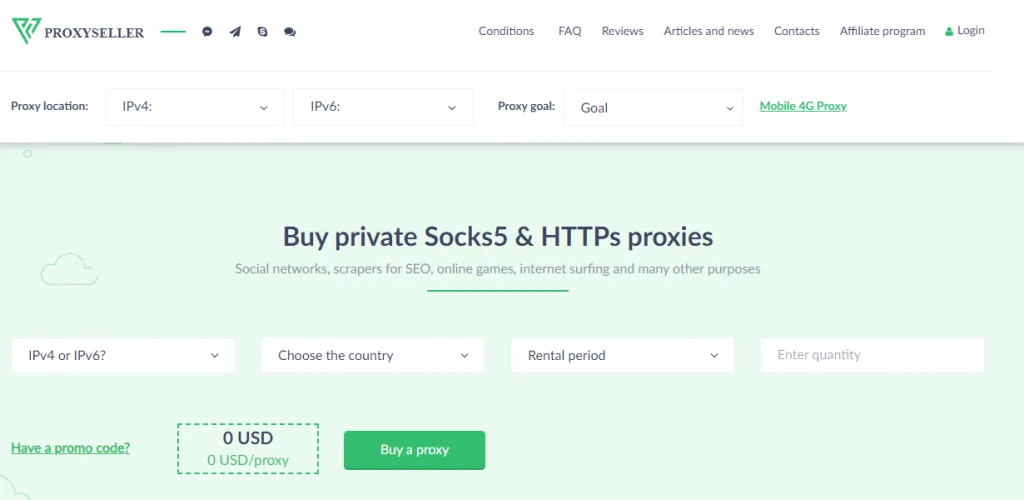
- Pricing: The pricing depends on the IP’s location. Monthly prices for mobile proxy servers start at $18 each, while IPV4 proxies start at $1.24 each. The IPV6 proxy servers start at $0.08 each monthly, and finally, the ISP proxies start at $1.50 each.
With so many datacenter proxy services, making a name for itself can be challenging for most providers. Proxy-Seller has managed to catch the attention of many users by offering high-performing datacenter IPs at relatively affordable prices.
For starters, this russian provider is one of the few companies offering IPV6 proxies, which are known to be cheaper than IPV4. On top of that, the customization options here are pretty much limitless, as you can select a proxy based on factors such as application, location, and period after which the website will generate pricing.
Speaking of pricing, the proxies here are way more affordable than what most companies on our list have to offer. Customer support is also good, as you get a live chat option to contact the agents on demand.
✓ Features
- Private IPs from worldwide locations
- Affordable
- IPV6 support
- SOCKS5 support
- Good catalog diversity
- 24-hour money-back guarantee
✗ Negatives
- No free trial
- Unknown proxy pool size
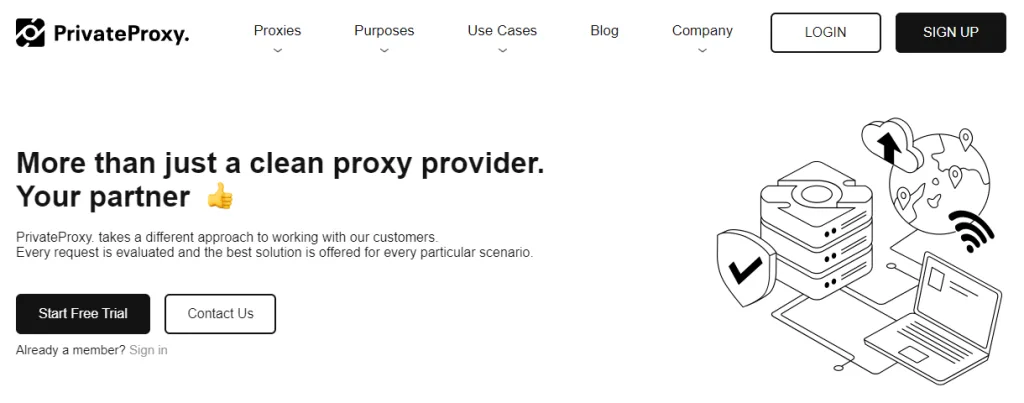
- Pricing: Static datacenter proxy servers start from $9/month for 3 IPs, while static residential proxies start from $5 a month per 1 IP. Rotating datacenter proxy servers start from $59/month, while rotating residential proxies start from $150/month.
With more than a decade in the business, PrivateProxy is one of those companies you cannot just overlook. It offers a mix of static and rotating residential and datacenter proxy services.
One of the biggest appeals of this company is its customer support. The agents are always available to help you via multiple channels, including a live chat. The UK-based provider has a stellar track record from 2011, boosting confidence in the service.
The proxies support all major features, such as HTTPS protocol, unlimited connections, unlimited bandwidth, and good location support. You also get a 7-day free trial, which allows you to test the service before opting whether to make any commitments to the company.
✓ Features
- Residential and datacenter IPs from US and EU
- Private IPs
- Static and rotating proxies
- Instant activation
- HTTPS support
- Unlimited connections
- 7-day free trial
- Pocket-friendly prices
- Unlimited bandwidth
✗ Negatives
- No money-back guarantee
- No SOCKS support
- Unknown proxy pool size

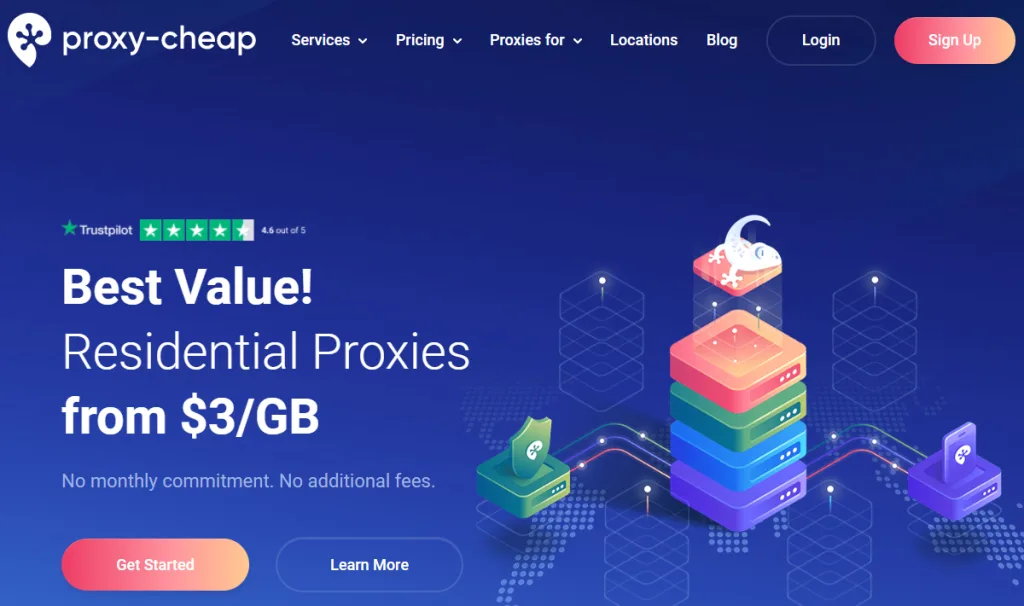
- Pricing: IPv4 datacenter proxy servers start at $1.99 each, while the static residential proxies start at $3.49 each. The regular residential proxies start from $4.99 per GB, and the mobile proxy servers start from $50 a month.
Proxy-Cheap can be easily overlooked, being less popular than some providers on our list. The reality is that this is a provider with amazingly low prices for features you would only expect from top-tier companies.
You can get datacenter, residential, and mobile proxy services with awesome features at very competitive prices. This company offers IPv4, IPv6, and SOCKS5 support (for datacenter proxies), instant activation, and dual authentication.
When it comes to the drawbacks, Proxy-Cheap has a strict non-refund policy, so don’t waste your time looking for a money-back guarantee. On top of that, the service doesn’t offer a free trial. But the low prices with no monthly commitment make a free trial unnecessary.
✓ Features
- 7+ million IPs in around 100 locations
- Dedicated IPs
- Pocket friendly
- Sticky sessions
- User friendly
- Live chat support
- SOCKS5 support (for datacenter IPs)
- Unlimited bandwidth
✗ Negatives
- No HTTPS and SOCKS support for residential IPs

- Pricing: Residential proxy servers start at $1/GB, while datacenter proxies start at $1/IP. The ISP proxy service is way more expensive, starting at $4.60/IP. The mobile proxy servers are $50 monthly, while the scraping bot is free.
Rayobyte might be unfamiliar, as many users still know this company as Blazing SEO. It was rebranded in 2026 after adding a series of features to benefit the customers. Previously, it was known for its datacenter proxy service, but now it offers mobile, ISP, and residential proxy servers as well.
The new proxy services are yet to pick up the pace, and the datacenter proxy servers are more performance-oriented. They span more than 300,000 IPs which is nothing remarkable as the infrastructure is where the real juice is.
These servers are paired with 20,000 C-class subnets across 9 different ASNs, making the Rayobyte datacenter proxy service a particularly robust network. The website offers a free trial, but you must contact the customer support team for details.
✓ Features
- 300,000 datacenter IPs in 26 countries
- Pocket-friendly proxies
- Unlimited traffic and threads
- Good reputation
- Precise geo-targeting
✗ Negatives
- Limited mobile and residential proxies
Conclusion
A Chromebook proxy is the most flexible privacy, unblocking, and automation tool you can run on ChromeOS in 2026 — exactly because the OS itself doesn't ship with a desktop VPN client and managed devices are increasingly common. Whether you're a student bypassing a school filter on a personal Chromebook, a remote worker protecting Chrome Remote Desktop sessions, or a power user running scrapers from a budget device, the right pairing is a residential plan for everything user-facing and a datacenter plan for speed-critical workloads. Pick the provider that matches your dominant use case from the list above, follow the ChromeOS setup walkthrough, and you'll have a stable, fast, and policy-aware Chromebook in minutes.